A common mistake in Dunedin is treating a retaining wall as a standard structural element without first understanding what it's holding back. Engineers receive wall drawings and proceed directly to reinforcement schedules, only to face cracking or rotation within the first wet winter. The problem isn't the concrete or the steel—it's the ground behind it. Dunedin's hillside suburbs from Maori Hill to Opoho sit on loess deposits that lose significant strength when saturated. Designing a wall here without test pits to log the colluvium depth and Atterberg limits to quantify the silt's plasticity is a risk no contractor should carry. We step in before the design is locked, providing the soil parameters that turn a generic wall into one that actually works on this specific slope.
A retaining wall is only as reliable as the soil parameters behind it. In Dunedin's loess, that means testing, not guessing.
Methodology applied in Dunedin
Local geotechnical conditions in Dunedin
Dunedin's geography creates two distinct wall challenges that rarely appear together elsewhere. The coastal strip from St Clair to Port Chalmers exposes walls to salt-laden wind and occasional storm surge, demanding durability concrete and corrosion-protected reinforcement. Move just two kilometres inland to the Town Belt and the problem shifts to loess collapse upon wetting—a phenomenon well documented in Otago but often underestimated during summer construction when the ground appears competent. A wall founded on unsaturated loess in February can settle differentially by July once the water table rises. We've seen walls on the Peninsula tilt 80 millimetres in a single season because the designer assumed a generic 300 kPa bearing pressure without confirming the subgrade with in-situ permeability testing. The expense of remedial work dwarfs the cost of getting the parameters right the first time.
Our services
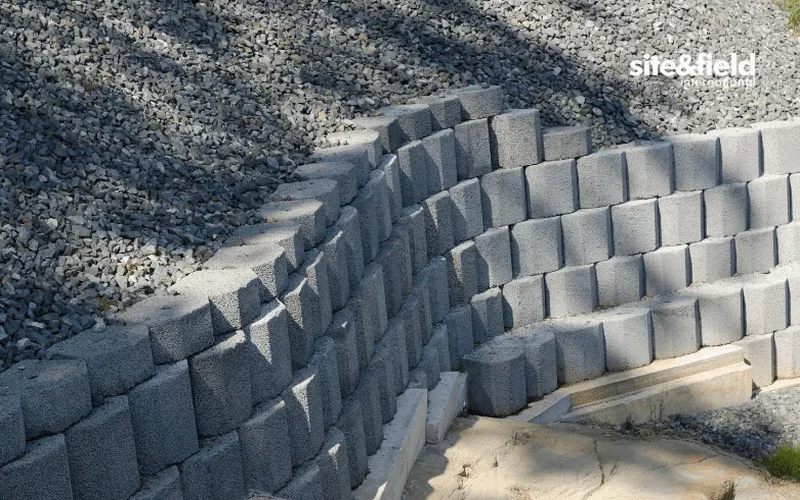
Our retaining wall design support covers the full geotechnical scope needed for Dunedin's varied terrain. From initial site characterisation to final backfill verification, we deliver the numbers your structural engineer needs.
Geotechnical Design Parameter Reports
Site-specific reports providing drained and undrained shear strength, earth pressure coefficients, bearing capacity, and seismic parameters for any wall type—gravity, cantilever, anchored, or MSE. Includes recommendations for drainage and backfill specification per NZGS guidelines.
Construction Phase Testing and Verification
Compaction testing of backfill and foundation subgrade using nuclear densometer and sand cone methods. We also perform proof rolling observation and drainage aggregate gradation checks to confirm the as-built conditions match design assumptions.
Common questions
What retaining wall types are most suitable for Dunedin's loess soils?
Cantilever reinforced concrete walls and mechanically stabilised earth (MSE) walls perform well when designed with proper drainage. Gravity walls can work but often require wider foundations in loess to keep bearing pressures low. We typically recommend against unreinforced masonry in loess areas due to its brittleness under differential settlement.
At what wall height does Dunedin City Council require a geotechnical report?
Generally, walls over 1.5 metres require a producer statement from a chartered engineer, which includes geotechnical input. However, any wall retaining a driveway, neighbouring property, or public land will likely need a site-specific investigation regardless of height. We recommend checking the current DCC District Plan requirements during early design.
What is the typical cost range for retaining wall geotechnical design input in Dunedin?
For a standard residential wall in Dunedin, geotechnical investigation and parameter reporting typically falls between NZ$1.870 and NZ$6.760, depending on the number of test pits, laboratory testing required, and wall complexity. Commercial or tied-back walls are quoted case-by-case after reviewing the site constraints.