NZS 4402:1986 Methods of Testing Soils for Civil Engineering Purposes requires that any fine-grained soil encountered during site investigation in Dunedin be characterised for its plasticity. The city sits on a complex mosaic of loess-mantled volcanic slopes, estuarine silts from the reclaimed Otago Harbour foreshore, and deeply weathered schist residuum — each material presenting a distinct Atterberg profile that directly governs foundation bearing capacity, shrink-swell potential, and excavation stability. Our IANZ-accredited laboratory processes hundreds of samples annually from projects in South Dunedin, the hill suburbs, and the Taieri Plain, delivering liquid limit, plastic limit, and plasticity index results calibrated to the NZGS soil classification framework. The test pits and borehole campaigns that feed our laboratory consistently reveal plastic silts in the Caversham Formation and sensitive clays in the harbour basin deposits — materials where moisture content variation of just a few percent can shift the soil from a workable state to near-impossible conditions for earthmoving plant.
Dunedin's loess-derived soils can shift from plastic to liquid state with less than 8 percent moisture variation — a narrow operational window that demands precise Atterberg characterisation before any cut or fill decision is made on site.
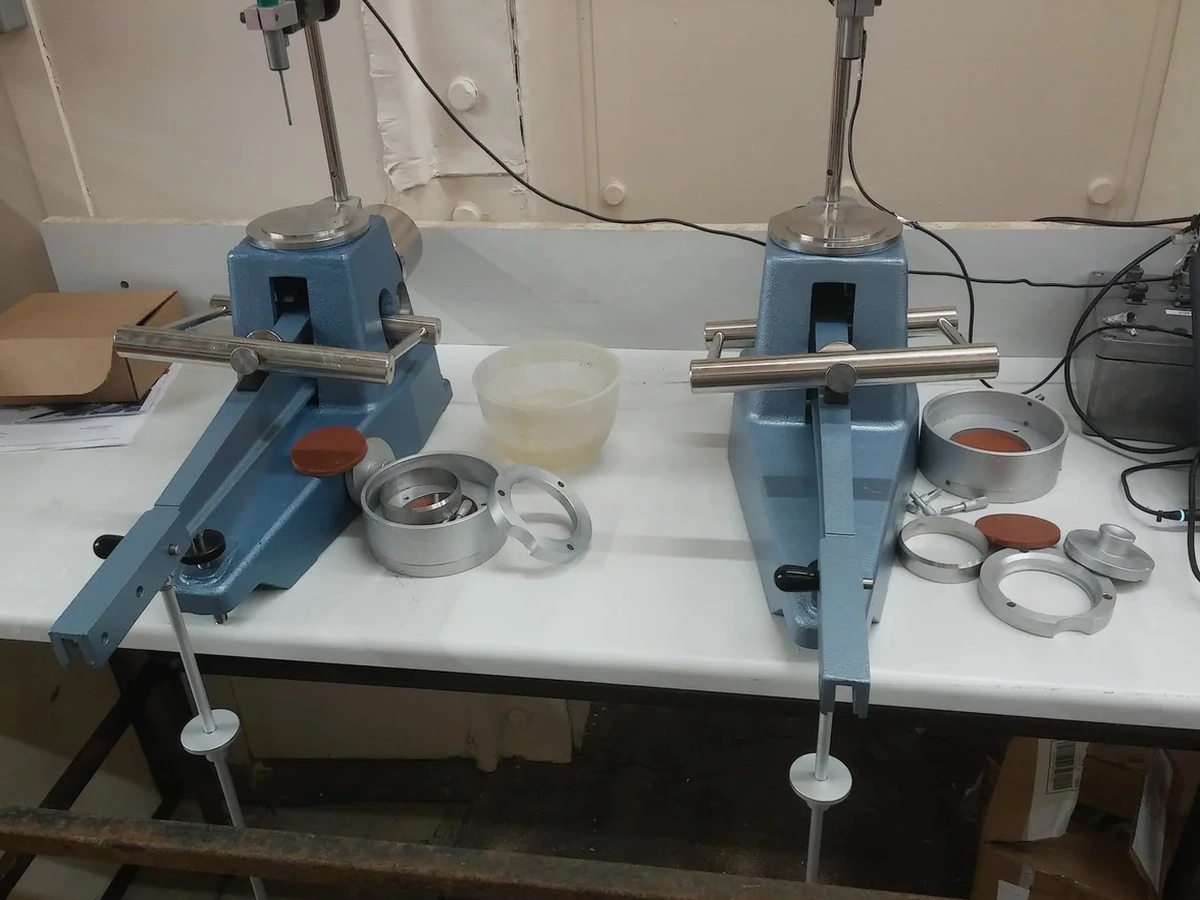
Methodology applied in Dunedin
Live process video
Local geotechnical conditions in Dunedin
A commercial excavation on Cumberland Street encountered saturated silty clay at 2.4 metres depth that the contractor assumed would stand unsupported for a three-day stormwater trenching operation. Preliminary soil descriptions from the borehole log noted 'sandy silt' — but no Atterberg testing had been performed, and the material's plasticity index was entirely unknown. Overnight rainfall of 18 millimetres pushed the in-situ moisture content past the liquid limit, the trench face collapsed across a 14-metre run, and the resulting remediation delayed the project by eleven working days while shoring was redesigned and imported granular backfill was placed. Subsequent laboratory testing of the collapse zone material returned a liquid limit of 58 percent and a plasticity index of 24 — a moderately plastic clay that should never have been classified as silt. In Dunedin's variable climate, where frontal systems from the Southern Ocean deliver sustained rainfall onto hillside catchments, the cost of omitting Atterberg limits from a ground investigation is measured in unplanned earthworks, compromised subgrade performance, and foundation settlements that become apparent years after practical completion.
Our services
Our Dunedin laboratory provides a comprehensive suite of Atterberg limits testing services configured to match the soil types most frequently encountered across Otago's geotechnical settings. Each service tier is designed to deliver the classification precision required by the relevant NZS standard and the practical information that engineers and contractors need for earthworks specification, foundation design, and pavement subgrade assessment.
Standard Atterberg Limits (LL + PL + PI)
Complete determination of liquid limit, plastic limit, and plasticity index on a single sample. Includes NZGS group symbol assignment and a concise interpretive note on the soil's expected engineering behaviour based on the Casagrande plasticity chart. Suitable for routine site investigation boreholes across Dunedin's residential subdivisions and commercial developments.
Atterberg Series with In-Situ Moisture and Liquidity Index
Full Atterberg suite paired with in-situ moisture content determination to compute the liquidity index. This combined dataset is critical for assessing the consistency state of soft clays in the South Dunedin basin and the Taieri Plain, where saturated fine-grained soils can approach liquid consistency under current groundwater conditions.
Multi-Point Atterberg Profiling
Atterberg limits determined at 1.0-metre depth intervals down a borehole or test pit profile. Reveals vertical plasticity trends through loess sequences, weathered schist horizons, and estuarine interbeds. Essential for slope stability back-analysis and for designing cut batters in the hill suburbs where material properties can change markedly over short vertical distances.
Expedited Atterberg for Earthworks Control
Rapid 24-hour turnaround service for contractors who encounter unexpected fine-grained layers during bulk earthworks. Liquid limit and plastic limit reported same-day where samples arrive before 10:00 am. Supports real-time decisions on material suitability, moisture conditioning requirements, and cut-to-fill placement protocols under NZS 4431 compaction specifications.
Common questions
What exactly do the Atterberg limits tell me about the soil on my Dunedin site?
The Atterberg limits define the moisture contents at which a fine-grained soil transitions between solid, plastic, and liquid states. The liquid limit marks the boundary between plastic and liquid behaviour; the plastic limit marks the boundary between semi-solid and plastic behaviour. The difference between them — the plasticity index — indicates how much water the soil can absorb while remaining plastic. A high PI means the soil is an active clay that will shrink and swell significantly with moisture changes, which is a critical consideration for foundation design in Dunedin's loess-mantled suburbs and for the expansive clay pockets found in weathered schist terrain across the hill suburbs.
How long does Atterberg limits testing take in your Dunedin laboratory?
Our standard reporting turnaround is three to five working days from sample receipt. This allows time for sample preparation, oven-drying, wet sieving, and the full Casagrande cup and thread-rolling determinations with duplicate checks. For earthworks projects where a contractor hits unexpected material and needs to make a same-day decision on fill suitability, we offer an expedited service with results within 24 hours — and same-day reporting if samples reach our laboratory before 10:00 am. We recommend scheduling routine testing in advance during Dunedin's busier construction months from October through March.
What is the typical cost for Atterberg limits testing in Dunedin?
Standard Atterberg limits testing — covering liquid limit, plastic limit, and plasticity index on a single sample — ranges from NZ$100 to NZ$160 per sample depending on the number of samples submitted and whether additional determinations like in-situ moisture content or liquidity index calculation are required. Multi-point profiling along a borehole or test pit at 1.0-metre intervals is priced per depth increment, and we provide discounted batch rates for larger ground investigation programmes. All pricing includes the NZGS soil classification output and a brief interpretive commentary.
Which soils in Dunedin most often require Atterberg testing?
Any fine-grained soil — silt or clay — encountered during a site investigation in Dunedin should undergo Atterberg limits testing. The materials that most frequently demand this analysis are the loess colluvium blanketing the hill suburbs from Maori Hill to Brockville, the estuarine silts and clays underlying South Dunedin and the reclaimed harbour foreshore, the alluvial clays of the Taieri Plain, and the deeply weathered schist residuum that appears at depth across much of the city. Even apparently granular fills in older parts of town often contain sufficient fines to warrant Atterberg determination, particularly where they derive from reworked loess or harbour dredgings.
How should I prepare and transport soil samples for Atterberg testing?
Samples for Atterberg limits testing should be sealed in airtight plastic bags or jars immediately after collection to preserve the in-situ moisture content. We require approximately 300 to 500 grams of material passing the 19-millimetre sieve, though smaller quantities can be accommodated for hand-auger or thin-wall tube samples. Samples must be clearly labelled with the project name, borehole or test pit identifier, and depth interval. Transport to our Dunedin laboratory should be arranged within 24 hours of collection; if delays are unavoidable, samples can be stored in a cool environment away from direct sunlight. We supply sample bags and labels at no charge for larger ground investigation programmes.