Ground improvement in Dunedin encompasses a suite of geotechnical techniques designed to enhance the engineering properties of soil and rock masses, ensuring they can safely support structural loads and resist seismic forces. This category covers everything from densification and reinforcement to drainage and chemical stabilisation, tailored to the city's often challenging subsurface conditions. For a region marked by volcanic formations, alluvial valleys, and reclaimed coastal land, ground improvement is not merely an option but a fundamental requirement for resilient infrastructure. Whether it's mitigating liquefaction potential in saturated silts or increasing bearing capacity in loose fills, these methods protect both new developments and existing assets across Otago's capital.
Dunedin's geology is dominated by the Dunedin Volcanic Complex, which produces basalt, tuff, and breccia overlain by Quaternary sediments including loess, alluvium, and estuarine deposits. The central city and harbour margins frequently encounter soft, compressible clays and loose sands that are prone to settlement and liquefaction under the seismic loads defined by the New Zealand Seismic Hazard Model. Reclaimed areas near the Otago Harbour, such as parts of the central business district, present particularly variable ground with undocumented fill and high groundwater tables. These conditions demand rigorous site investigation and ground improvement strategies to meet performance criteria for modern structures, from low-rise residential to multi-storey commercial buildings.
All ground improvement works in Dunedin must comply with the New Zealand Building Code, particularly Clause B1 (Structure) and Clause B2 (Durability), which refer to acceptable solutions and verification methods such as NZS 3604:2011 for timber-framed buildings or NZS 1170.5 for seismic actions. The Ministry of Business, Innovation and Employment (MBIE) provides guidance through the module on ground improvement in the Geotechnical Engineering Practice series, while the New Zealand Geotechnical Society's guidelines for liquefaction assessment and mitigation are essential references. Local councils, including the Dunedin City Council, enforce these standards through the building consent process, often requiring peer review by chartered professional engineers for complex sites. The Canterbury earthquakes fundamentally reshaped expectations, making robust ground improvement a regulatory and market norm.
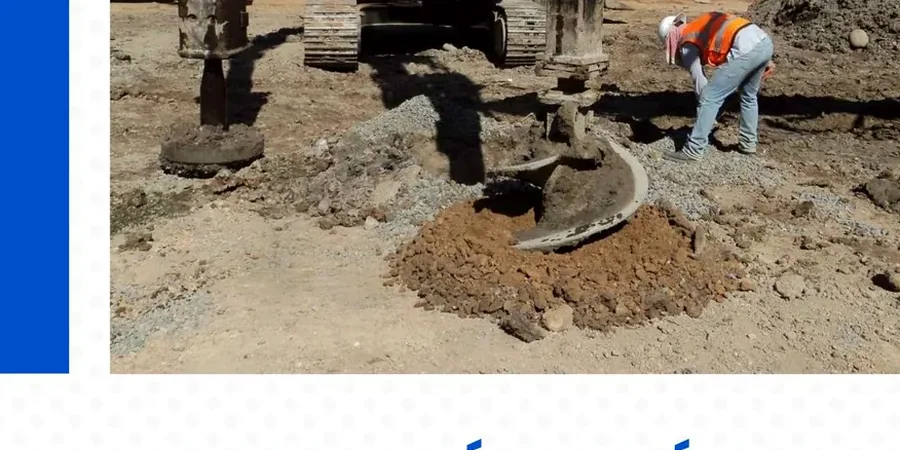
Residential subdivisions on sloping loess-mantled terrain often require ground improvement to manage slope stability and fill settlement, while commercial projects in the Warehouse Precinct or near the University of Otago campus demand solutions for liquefaction-prone alluvium. Infrastructure such as the Dunedin Hospital rebuild and arterial road upgrades rely heavily on techniques that densify granular soils or reinforce cohesive strata. A common approach involves stone column design, which provides vertical drainage and reinforcement in silty sands, reducing liquefaction risk and increasing stiffness. For cleaner sands and gravels, vibrocompaction design achieves deep densification through vibratory probes, offering a cost-effective path to meet settlement and bearing capacity targets. Both methods are tailored to Dunedin's specific seismic and geotechnical context, ensuring compliance with New Zealand's performance-based regulatory framework.
Available services
Common questions
What does ground improvement typically involve in Dunedin's geological context?
In Dunedin, ground improvement addresses soft alluvial clays, loose loess, and reclaimed harbour fills that are vulnerable to settlement and liquefaction. Techniques range from dynamic compaction and vibro-replacement to rigid inclusions and chemical grouting, all designed to increase density, improve drainage, or reinforce the soil matrix. Site investigations must account for the volcanic bedrock and variable Quaternary sediments to select the optimal method.
How do New Zealand building regulations influence ground improvement design?
Designs must comply with the New Zealand Building Code, particularly clauses for structural stability and durability, referencing standards like NZS 1170.5 for seismic loads. MBIE and NZ Geotechnical Society guidelines dictate performance criteria for liquefaction resistance and settlement. Dunedin City Council requires building consent with geotechnical reports demonstrating that improved ground meets ultimate and serviceability limit states, often involving peer review for complex sites.
Which types of Dunedin projects most frequently require ground improvement?
Projects on the Taieri Plains, central city reclaimed land, and hillside subdivisions commonly need ground improvement due to soft soils, high groundwater, or slope instability. This includes multi-unit residential developments, commercial buildings in the CBD, and infrastructure like bridges and retaining walls. Any structure where differential settlement or seismic performance could compromise safety or functionality will likely require targeted ground treatment.
What is the difference between stone columns and vibrocompaction for local soil conditions?
Stone columns are preferred in cohesive or mixed soils, such as Dunedin's silty alluvium, where they provide both reinforcement and drainage to mitigate liquefaction and improve shear strength. Vibrocompaction is most effective in clean, granular soils like sands and gravels, where vibratory energy directly densifies the matrix. The choice depends on fines content, groundwater, and project-specific performance requirements, often determined through cone penetration testing.