In-situ testing forms the backbone of reliable geotechnical site investigation in Dunedin, providing engineers with direct measurements of soil and rock properties without the disturbance inherent in laboratory sampling. This category encompasses a range of field-based methods designed to evaluate ground conditions in their natural state, from density and strength assessments to permeability and deformation characteristics. For a city built on complex volcanic and sedimentary foundations, where slopes meet harbour edges and historic structures stand alongside new developments, the accuracy of on-site testing directly influences foundation design, earthworks planning, and long-term asset performance. The value of in-situ testing lies in its ability to capture the true behaviour of heterogeneous materials—particularly the loess, basalt flows, and alluvial deposits that characterise the Dunedin landscape—under actual loading and environmental conditions.
Dunedin's geological setting presents a unique challenge for geotechnical practitioners. The city is underlain by the Dunedin Volcanic Complex, a Miocene-era sequence of basalt, trachyte, and phonolite flows interbedded with tuffs and breccias, extensively weathered in many areas to form residual clays of variable strength. Overlying these volcanic rocks are thick deposits of loess—wind-blown silt from glacial periods—which mantle the hillsides and are notoriously prone to collapse upon wetting. Harbour-side areas contain soft estuarine and marine sediments, while the Taieri Plain features deep alluvial gravels and organic soils. This geological diversity demands a tailored approach to in-situ testing, where methods such as the field density test (sand cone method) prove essential for assessing compaction in loess fill, while cone penetration testing may be required for soft sediment profiling. Understanding the local stratigraphy is critical, as weathered basalt can transition from rock-like to soil-like behaviour within short distances, making visual classification alone insufficient.
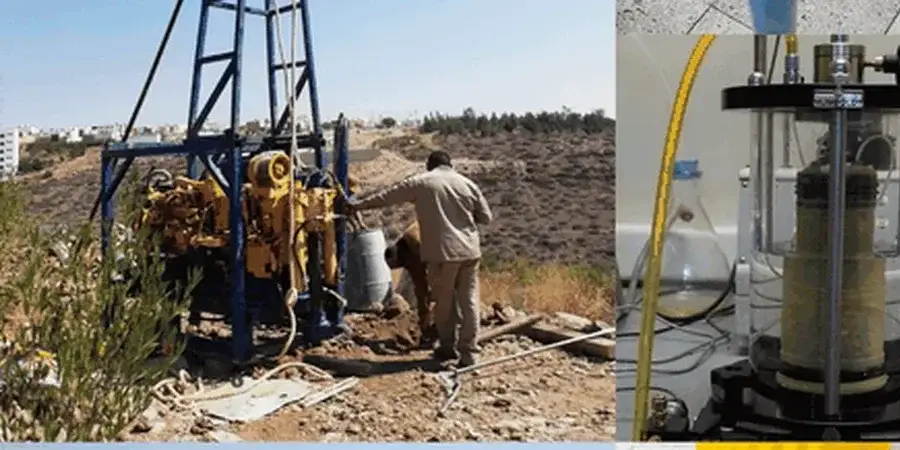
New Zealand's regulatory framework for in-situ testing is governed primarily by the New Zealand Geotechnical Society (NZGS) guidelines and the relevant parts of NZS 4402 (Methods of Testing Soils for Civil Engineering Purposes) and NZS 1170.5 for seismic considerations. The Building Act 2004 and the Resource Management Act 1991 establish the consenting environment within which testing results are evaluated, while the Earthquake-prone Building provisions add urgency to accurate ground assessment. In Dunedin, the local territorial authority—Dunedin City Council—requires geotechnical reports to comply with the NZGS Module 1 guidelines, which specify minimum investigation densities and appropriate testing methods based on the geotechnical category of the project. For density testing, the field density test (sand cone method) must adhere to NZS 4402:1986 Test 5.2, ensuring consistency in compaction verification for structural fill and roading applications. Practitioners must also consider the implications of the Health and Safety at Work Act 2015 when planning in-situ campaigns, particularly on slopes or in confined excavations.
The types of projects requiring in-situ testing in Dunedin span residential, commercial, and infrastructure sectors. Hillside subdivisions on loess-mantled slopes demand rigorous density and strength testing to validate cut-and-fill operations and retaining wall designs, where a field density test (sand cone method) provides the compaction assurance needed for building platforms. Commercial developments in the central city, often founded on variable fill over estuarine sediments, require cone penetration tests and shear vane testing to characterise bearing capacity and settlement potential. Infrastructure projects, including the city's ongoing watermain renewals and road widening programmes, rely on in-situ permeability testing and plate load tests to ensure pavement subgrade performance. The Dunedin Hospital rebuild, one of the largest health infrastructure projects in New Zealand, has highlighted the critical role of in-situ testing in verifying ground improvement and deep foundation performance in challenging inner-city ground conditions. Each project type demands a targeted testing regime that reflects the specific geological risks and structural requirements of the site.
Available services
Common questions
What is in-situ testing and why is it preferred over laboratory testing for some Dunedin soils?
In-situ testing measures soil and rock properties directly in the ground without removing samples, preserving natural stress states, moisture conditions, and fabric. In Dunedin's loess and weathered basalt, sampling disturbance can significantly alter strength and collapse potential, making field methods like cone penetration or density testing more representative of actual behaviour than laboratory alternatives.
Which New Zealand standards govern in-situ testing methods in Dunedin?
Primary standards include NZS 4402 for soil testing methods—covering density, penetration, and shear vane procedures—and NZGS guidelines for investigation scope and interpretation. The Building Act 2004 and local Dunedin City Council consenting policies require testing to follow these standards, with seismic design referencing NZS 1170.5 where applicable.
When is in-situ testing required for a residential building project in Dunedin?
In-situ testing is typically required for residential projects on slopes, in areas of known fill or soft ground, or where the Dunedin City Council's land instability maps indicate potential risk. Compaction testing, bearing capacity assessment, and liquefaction evaluation may all necessitate field testing as part of the building consent application process.
How does Dunedin's volcanic geology affect the choice of in-situ testing methods?
Dunedin's volcanic geology creates highly variable ground profiles with weathered basalt, tuff layers, and loess cover. This variability demands a combination of methods—dynamic probing or cone penetration to locate rockhead, shear vane testing in residual clays, and density tests in fill—to adequately characterise the transition between soil and rock across a site.