We keep seeing the same mistake on Dunedin projects: a pavement structure designed off generic CBR tables, ignoring the actual moisture sensitivity of the formation. The result shows up within two winters—rutting, crocodile cracking, edge failure. Flexible pavement design here is not a thickness selection exercise. It is a drainage and stiffness problem, governed by the interaction between the unbound layers and a subgrade that can swing from stiff to near-plastic depending on rainfall. In the South Dunedin flat and across the hill suburbs, the bearing capacity of the upper 400 mm dictates the entire structural section, and assumptions borrowed from Canterbury or Waikato simply do not hold. Before locking in a pavement design, we typically drill test pits to recover undisturbed samples and correlate field density with soaked CBR values measured in the laboratory under NZS 4402 conditions.
A pavement design based on a dry-weather CBR is a two-year warranty. In Dunedin, you design for the soaked condition or you rebuild.
Methodology applied in Dunedin
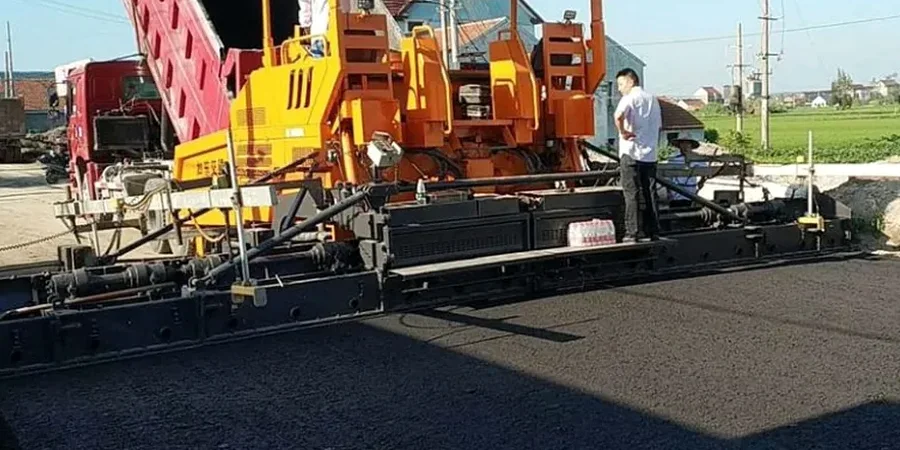
Local geotechnical conditions in Dunedin
A recent warehouse development in the Kaikorai Valley delivered a textbook failure pattern. The designers specified a standard 150 mm granular base over a thin subbase, relying on a desktop CBR of 5 percent. The formation was silty clay derived from weathered schist, sitting on a shallow water table that was not identified during the initial site walk. After eighteen months of container forklift traffic, rut depths exceeded 45 mm and the pavement lost all crossfall. The forensic investigation showed the actual soaked CBR was below 2 percent and the unbound layers were saturated for more than half the year. In Dunedin’s marine west-coast climate—with an average of 170 rain days per year and drizzle events that keep the pavement in a near-saturated state—ignoring the subgrade moisture regime is the fastest way to erase the design life. The repair required full-depth reconstruction with a geotextile separator, an increased subbase thickness, and edge drains to intercept groundwater flowing from the adjacent hill slope.
Our services
Our pavement engineering in Dunedin covers the full design chain, from subgrade investigation through to construction specification and layer modulus verification. We work with local contractors and aggregate suppliers to ensure the design is buildable with available materials.
Pavement Structural Design and Analysis
Mechanistic-empirical design of flexible pavements for residential subdivisions, arterial roads, and industrial yards. Includes traffic spectrum definition, subgrade CBR profiling, layer thickness optimisation, and performance checks against rutting and fatigue using Austroads procedures.
Subgrade Investigation and CBR Testing
Field sampling by test pit or borehole, laboratory soaked CBR determination (NZS 4402), resilient modulus testing, and groundwater monitoring. We deliver a subgrade stiffness map that feeds directly into the pavement design model.
Common questions
Why does the subgrade CBR drop so much in Dunedin compared to drier regions?
The combination of loess-derived silts, weathered schist clays, and a maritime climate with frequent light rainfall keeps the pavement foundation near saturation for extended periods. Soaked CBR values can be one-third to one-fifth of the dry-weather value, which is why our design protocol always uses the moisture-conditioned strength.
What is the typical cost range for a flexible pavement design package?
For a standard residential or light industrial pavement in Dunedin, including site investigation, laboratory CBR testing, and the design report with construction specifications, the fee ranges from NZ$3,150 to NZ$7,770 depending on the number of test locations and the traffic loading complexity.
Can you use locally sourced aggregate from the Taieri or Clutha quarries in the design?
Yes, we routinely characterise local aggregates through grading, plasticity index, and crushing resistance tests. If the material falls outside TNZ M/4 specification, we adjust the design—either by blending, mechanical stabilisation, or increasing layer thickness—to achieve the required structural performance.