The ground beneath Andersons Bay tells a different story than the soil out on the Taieri. Volcanic-derived silts and residual basalt clays on the peninsula can mask soft layers that a simple visual inspection misses, while the alluvial deposits toward Mosgiel hide compressible peats at depth. Getting a clear picture of bearing capacity and density across a site requires more than surface observation. The Standard Penetration Test provides that depth-specific data, recording the blow count every 150 mm as a split-spoon sampler is driven through the strata. In Dunedin, where hillside basalt flows abut reclaimed harbour-edge fills, the SPT remains the most practical tool for correlating N-values with the shear strength parameters needed for foundation design under NZS 3404 and NZGS guidelines.
SPT N-values corrected for overburden give a direct path from hammer blows to allowable bearing pressure — no guesswork when the soil profile changes at two metres.
Methodology applied in Dunedin
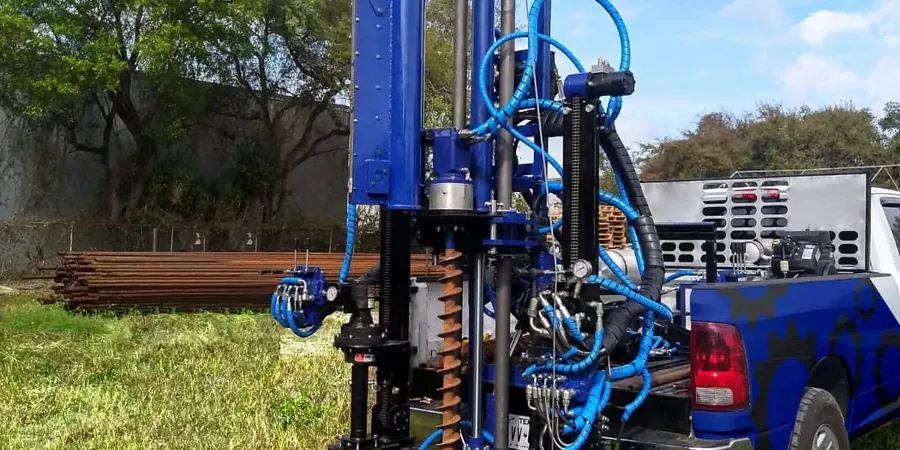
Local geotechnical conditions in Dunedin
Dunedin's expansion from the Octagon outward pushed development onto the steep colluvial slopes of the Town Belt and across the reclaimed flats of South Dunedin. Boreholes in the flat land routinely encounter loose, saturated silty sands at shallow depth — exactly the profile that liquefaction studies flag as high risk under a Mw 6.5+ event on the Akatore Fault. Skipping the SPT in these zones leaves the foundation design without the N-values needed for a defensible seismic assessment. On the hillside sites, where basalt floaters in a clay matrix create refusal at irregular depths, the SPT log identifies the competent bearing layer so engineers can specify the right pile depth or footing embedment without over-excavating. The team at the IANZ-accredited lab correlates each SPT run with particle size distribution and Atterberg limits to build a complete geotechnical model.
Our services
SPT testing in Dunedin rarely stands alone. The following combinations cover the typical ground conditions from the peninsula basalt to the Taieri alluvium.
Combined SPT and Borehole Logging Package
Each SPT run is paired with disturbed sampling and detailed lithological logging. The lab runs grain size distribution and Atterberg limits on representative samples, giving a complete NZS 4402-compliant borehole record.
Liquefaction Triggering Analysis with SPT Data
Boulanger-Idriss methodology applied to corrected N1(60) values, producing factor of safety against liquefaction and post-earthquake settlement estimates for the South Dunedin and Harbourside liquefaction zones.
Common questions
How deep do SPT boreholes typically go for a residential site in Dunedin?
Most single-dwelling investigations stop between 6 and 10 metres, or three metres into competent ground. On the hillside suburbs like Maori Hill where basalt refusal can hit at 2 metres, the borehole terminates at refusal. On the Taieri Plains, where compressible layers extend deeper, some boreholes reach 15 metres to confirm the bearing stratum.
What does an SPT test cost for a standard Dunedin section?
A single borehole with SPT at regular intervals runs between NZ$1,030 and NZ$1,260 depending on access and depth. Most residential jobs need two to three boreholes. Mobilisation to the Dunedin area is included, though steep sites requiring a portable rig on tracks may carry a small surcharge.
Are SPT results enough for a building consent application in Dunedin?
The Dunedin City Council accepts SPT data as part of a geotechnical report signed by a CPEng engineer, provided it includes N-value logs, soil descriptions, groundwater depth, and a bearing capacity recommendation. For sites in the South Dunedin liquefaction zone, the council will also require a liquefaction assessment derived from the SPT data.
How do you handle SPT refusal on basalt floaters?
When the sampler hits a basalt boulder and records refusal at 50 blows per 150 mm, the driller notes the depth, shifts the borehole laterally by 300 mm, and re-drills to the refusal depth before continuing. If refusal is persistent across several offsets, the log records it as practical refusal and the engineer interprets the depth as the top of a competent bearing layer.