The stability of slopes and the integrity of retaining structures are fundamental to safe and resilient development across Dunedin's distinctive terrain. This category encompasses the geotechnical design and analysis services that prevent landslips, support excavations, and ensure long-term performance of earth retaining systems. From the steep volcanic hillsides of the Otago Peninsula to the loess-covered slopes of the Taieri Plains, Dunedin presents a complex geotechnical environment where proactive slope and wall engineering is not just advisable but often essential. Our services integrate site-specific ground investigations with advanced analytical methods to deliver designs that meet both regulatory requirements and the expectations of property owners and developers.
Dunedin's geology is dominated by the Dunedin Volcanic Complex, comprising basalt, trachyte, and phonolite flows, often mantled by wind-blown loess deposits that are particularly prone to erosion and shallow instability. Add to this the influence of the Leith and Lindsay catchments, where alluvial and colluvial soils create variable ground conditions, and it becomes clear why a thorough understanding of local geomorphology underpins every project. The region's moderate to high seismic hazard, per the national seismic hazard model, further requires that designs account for dynamic loading on both natural slopes and engineered walls. Whether you are dealing with a creeping hillside in Maori Hill or a deep cut in Caversham sandstone, our slope stability analysis provides the critical insights needed to quantify risk and guide remediation.
All retaining wall and slope works in Dunedin must comply with the New Zealand Building Code, particularly Clause B1 (Structure), and are typically guided by the joint Australian/New Zealand standard AS/NZS 1170 for structural design actions, including seismic loads. The Dunedin City Council's District Plan also imposes specific earthworks and geotechnical reporting requirements, especially in identified landslide susceptibility zones. For walls over 1.5 metres in height, or where surcharges from buildings or traffic apply, a producer statement from a chartered geotechnical engineer is usually mandatory. Our retaining wall design service navigates these consent pathways, producing documentation that satisfies council engineering reviews while optimising wall dimensions and reinforcement for cost-effective construction.
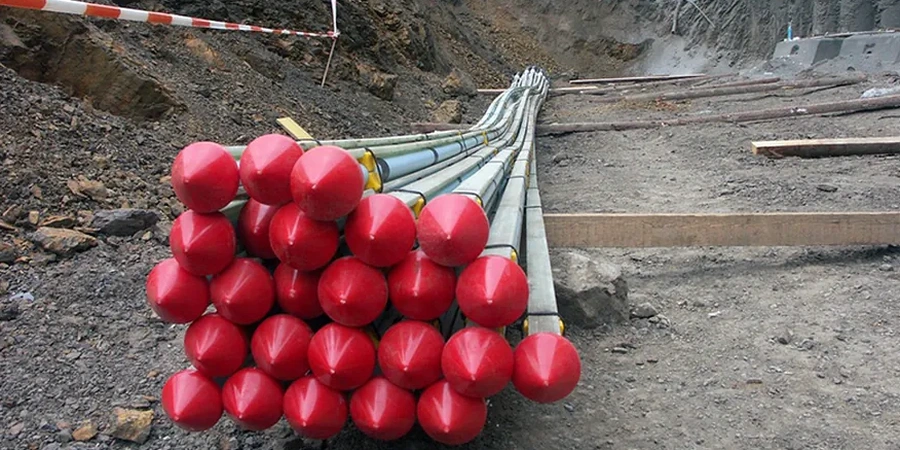
The types of projects that demand these services are diverse. Residential developments on sloping sections frequently require cut-fill analysis and the design of gravity, cantilever, or reinforced soil walls to create usable platforms. Infrastructure projects, such as road widenings along the Dunedin Southern Motorway or cycleway construction on the peninsula, rely on robust slope stabilisation measures and anchored systems to protect public assets. For challenging sites where space is constrained or where deep seated instability must be arrested, our active/passive anchor design offers a versatile solution, providing lateral restraint through grouted tendons that transfer load into competent rock or soil. Each project type demands a tailored approach, from preliminary desktop studies and site reconnaissance to detailed numerical modelling using limit equilibrium and finite element methods.
Common questions
What are the main factors that cause slope instability in Dunedin?
Slope instability in Dunedin is primarily driven by the region's loess soils, which lose strength when saturated, combined with steep volcanic landforms. Intense or prolonged rainfall events, undercutting by streams, and seismic shaking from local faults further trigger landslides. Human activities like excavation without adequate support or poor stormwater management frequently exacerbate natural susceptibility, making site-specific assessment essential before any earthworks begin.
When is a geotechnical report required for a retaining wall under the Dunedin District Plan?
A geotechnical report is typically required for retaining walls over 1.5 metres in height, walls supporting a building or surcharge, or any wall located within a mapped landslide susceptibility area. The Dunedin City Council may also request a report for smaller walls if there is evidence of slope instability, soft ground, or proximity to boundaries. The report must demonstrate compliance with the New Zealand Building Code B1 and include producer statement documentation.
What is the difference between active and passive anchors in slope stabilisation?
Active anchors are post-tensioned after installation, immediately applying a compressive force to the retained face or slope to prevent movement. Passive anchors, by contrast, are not tensioned and only develop resistance as the ground begins to deform. Active systems are chosen where movement must be strictly controlled, such as near existing structures, while passive anchors are often used for general reinforcement of rock masses or soil nails in cut slopes.
How does seismic loading affect retaining wall design in Dunedin?
Seismic loading introduces additional lateral earth pressures and inertial forces that must be accounted for in retaining wall design under AS/NZS 1170. In Dunedin's moderate seismic zone, walls are designed with factors of safety against sliding and overturning that include earthquake-induced ground acceleration. Dynamic analyses may be required for critical walls, considering potential liquefaction in saturated alluvial soils or increased active wedge pressure during shaking.